A San Francisco Ravedream

A chronicle of Bay Area nightlife, part of the "Writing on Raving" series, originally published in print.

A San Francisco Ravedream
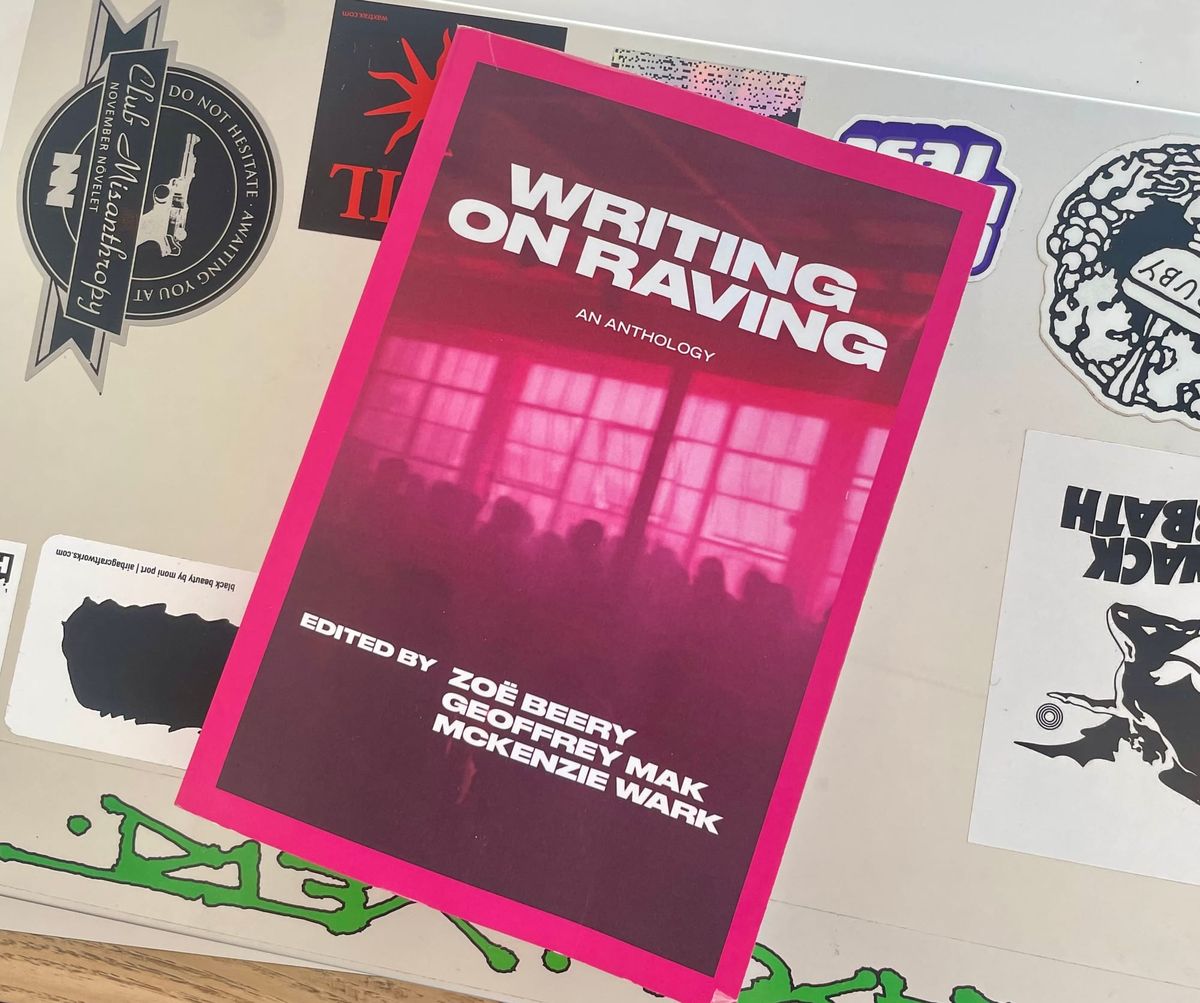
My copy of the Writing on Raving anthology plus the laptop I wrote this essay on.
A preface:

In 2023, I joined the Writing on Raving reading series, co-founded in Brooklyn by authors Zoë Beery, Geoffrey Mak, and McKenzie Wark, for a special San Francisco edition hosted at The Lab.

Over the course of several months, I wrote the following essay as I, and the city of San Francisco, were finally emerging from the polar stasis of lockdown. It is a chronicle, of sorts, of the decade-plus I spent participating in, building, and writing about the San Francisco club scene, circa 2011 to 2022.

More than that, though, I wanted the essay to function as a time capsule, a snapshot of the electricity that enlivened the streets (and clubs, and warehouses, and galleries, and so on) of this city during the brief interregnum between Tech 2.0 and 3.0—which we might define, very loosely, as the period between the Lehman Brothers crash of 2008 and the arrival of the Google bus protests of 2013-2014.

Reading back, I feel a swell of complicated feelings arising within. I'm proud of this work: I think it's one of the best essays I've written, and I'm enormously grateful to Geoffrey Mak for editing this essay and helping me shepherd it across the finish line. But I can't help but notice that, just as this essay was completed, San Francisco was on the cusp of yet another transformation, and has changed more drastically in the three years since I wrote this than in the 12-ish year span I catalogue here.

In 2024, this essay was published in print, alongside many other writers' works, in a Writing on Raving compendium, courtesy O/R Books. Here, I'm publishing it online for the first time.
This essay is publicly available for all to read. If this essay resonates with you, and you'd like to support my work, please consider a paid or free subscription to Thoughts of a Certain Sound.
This essay first appeared in Writing on Raving, published by O/R Books. Available online and wherever interesting books are sold.

1. 
Am I too old for this shit?

Music is my first love, the single ordering principle of my whole life. All I can really remember about falling in love are the firsts. Like the first time, when I was eight, that I found a cassette tape that my sister, nearly a decade older, had brought home early in the '90s. Titled Rave 'til Dawn, it featured a selection of first-wave Belgian hardcore and breakbeat tracks, whose raw, frenetic sounds pressed a searing brand into my juvenile brain. Growing up in the suburbs, this tape was a portal into another world—one I had no idea existed, but that I desperately needed to know more about. 

I listened in secret, after borrowing it—or stealing it—and sequestering myself away in my bedroom. I felt a vivid, all-encompassing sense that by listening, I was engaged in some sort of illicit act, that there was something forbidden and uncouth in this music. It was too brazen—something inherent in its very sound seemed against the law. I felt as if I had been struck by a lightning bolt, and though I couldn't have known it at the time, I would be chasing that dragon ever after.
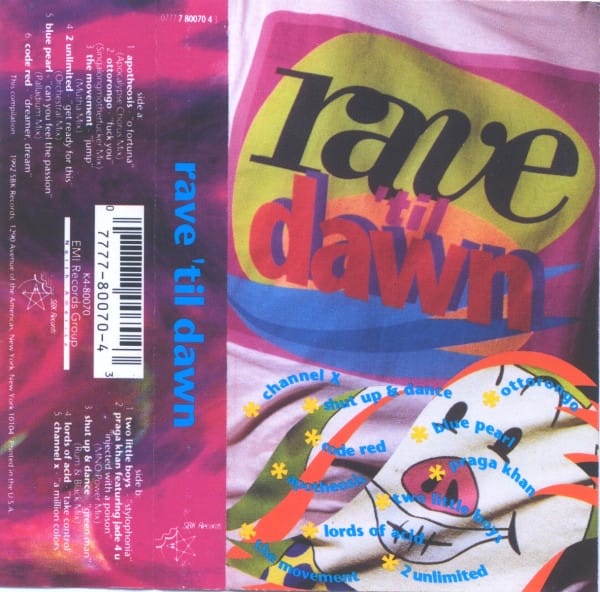
A cassette tape that changed my life at the tender young age of eight (or so). Image sourced from Discogs.

Then there was the first time I went to a club. I had just returned to the Bay Area after school in Ontario, Canada, my first time living outside of the Bay. Though I had spent years immersing myself in dance music—learning whatever history I could find on the internet, picking and bootlegging favorite tracks—I had never been to a rave. I didn't understand what it meant to "go dancing," which, in my mind, was something that only people who went to their high school prom did. I was well-versed in the multitudes of electronic music in my head, but I was lacking its most fundamental education in the body. 

At the time, I had just gotten out of a breakup, and my friend Jon suggested we attend a night called Warm Leatherette—named after the iconic post-punk song—at a spot I'd never heard of called Koko's near Geary and Franklin. It's gone now, but back then it was a nondescript dive with taps and bottles and disinterested bartenders serving a motley crowd of local barflies, men wearing 49ers jerseys, and groups of friends celebrating one thing or another. 

Off in the corner, I spotted my people immediately: a group of ten or fifteen, crowded around a couple of turntables, blasting wiry synth-punk records to the total disinterest of the rest of the bar. Clad in black, they were arrayed head-to-toe with the subcultural signifiers that I spent my teenage years chasing after, in search of a personality. I lingered nearby with Jon, awkwardly—both of us were terminal internet addicts and had spent the majority of our lives socializing online, to the severe detriment of our interpersonal skills. But a few drinks loosened us up, and we joined the group and met new people. 
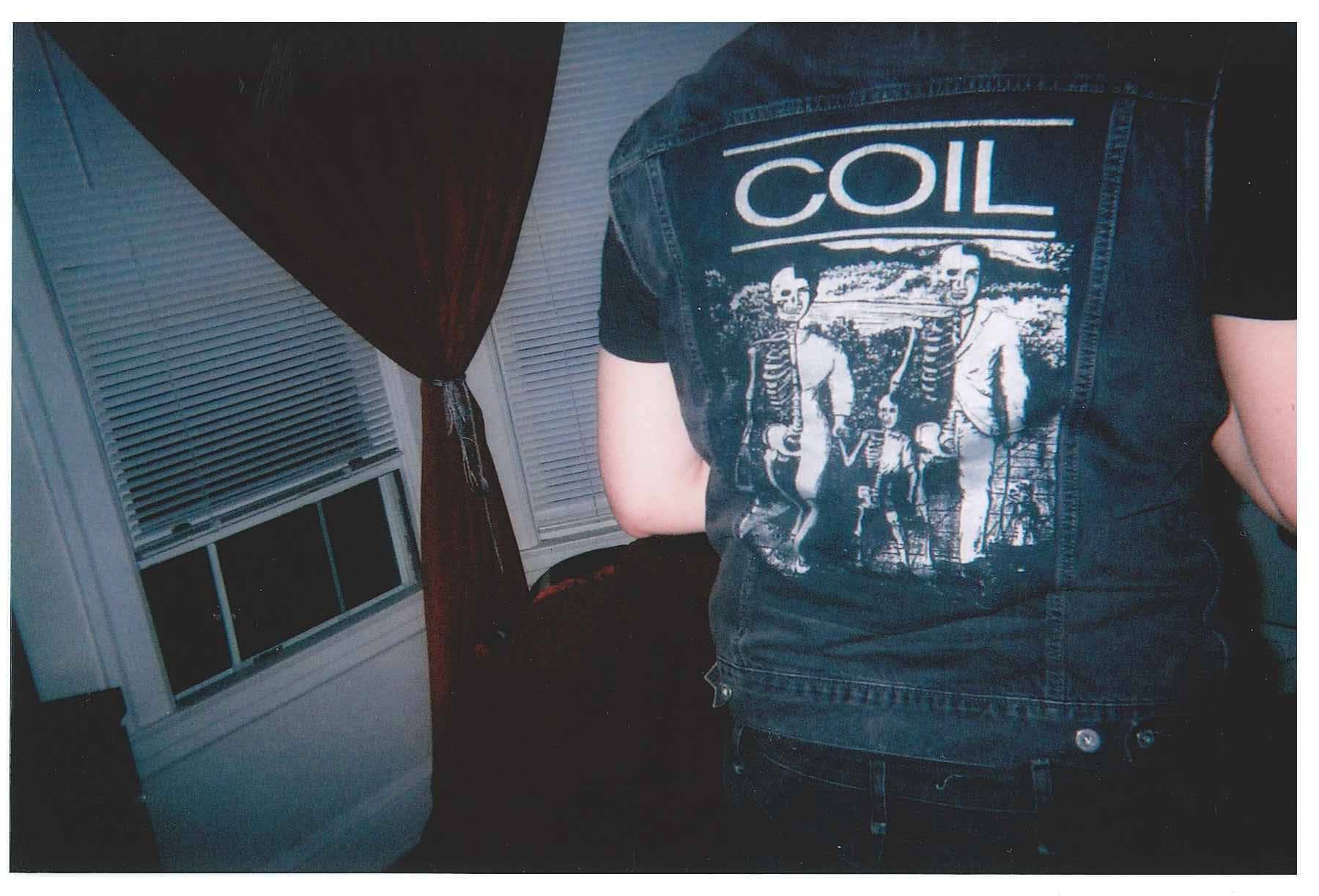
Jon and his Coil back patch circa 2013.

Even though I hadn't heard any of the records the DJs were playing, they felt intimately familiar, like I had already encountered them in a dream. Each track was riddled with the manic, nervous energy of punk, but carried by an infectious electronic groove, like the electronic body music and proto-techno I had known and loved growing up. I had stumbled upon some kind of missing link.  

Toward the end of the night, one of the DJs played the Dutch electro anthem "Space Invaders Are Smoking Grass," a track I had only ever heard at home, by myself—but never on a night out and certainly never in this context, sandwiched between raucous, wavy songs by disaffected European youth. Suddenly, I got it. The track sounded different, felt different. I was gripped by an unfamiliar energy. Listening amongst this tiny crowd of weirdos I had just met, I got what I had been missing out on, what I had lost by sitting at home with headphones: that music is so much more than an artform—it's a social binder, an aural glue that brings people together and ties them up in community. 

I went up to the DJ and thanked him, told him I loved this track, that I had never heard it mixed with others like these before. He told me his name: Nihar. He was tall and deftly bearded with an unhinged frizz of curly hair, like Jack Nance from Eraserhead if Jack were brown, and he wore a torn and faded t-shirt bearing the insignia of some punk or metal band I had never heard of. That he was a DJ, even if just a hobbyist, seemed thrillingly cool to me, and shockingly accessible. In my naive mind, DJs were mythical figures, the stuff of legend: DJing was the province of Jeff Mills or Richie Hawtin, people whose mix CDs I'd find for sale in the racks at Amoeba. But I had it all wrong, of course—it was the amateurs who had always run the show. I didn’t know it then, but Nihar would become one of my best friends and longest-running musical collaborators. More and more would appear the deeper I immersed myself in the local scene. 

Soon came my first underground parties—literally underground: beneath a curio shop on 24th; in the basement of an illegal club on 6th; down some horrifically unsafe stairs at 17th and Capp. At these spots I danced myself into a stupor for the first time. I stayed 'til the lights came on, and then time and time again. At these spots I shared a kiss on the dancefloor for the first time: one night after Icee Hot in the Loft at Public Works was done, Jenna dragged me to a warehouse several blocks north on Mission Street, where she and I embraced one another amongst hundreds of sweaty harness-bound men, all of us pulsing as one solid mass past 4 a.m. And at these spots I did drugs for the first time: I swallowed a clear gel caplet—"moon rocks," or so my friend said—and I ended the night being driven around in the back of a van containing dozens of CRT TVs that had lit up the party just hours before, laughing myself into oblivion. 

The CRT TVs in question. I snapped this circa 2012—I think the party was headlined by Rrose and Mark Fell.

Eventually, I played my first DJ set. Because I spent so long without ever really going out, my relationship with DJing was abstracted, too—it had never occurred to me that I might try it myself. But my friends kept telling me: "You like a bunch of good music, and you should play it out some time," and I realized it really is that simple.

That night I took the stage and played a series of records to a very small crowd for the very first time. I insisted on mixing vinyl, the mark of an insecure amateur, and I trainwrecked half the mixes, lacking in both confidence and technical skill. But on a few cuts, I nailed the timing just right, seamlessly blending one track with another, and it felt like alchemy. Looking out amongst the meager crowd, I saw wonder on their faces, the joy of musical discovery happening in real time. I was hooked.      

Not long after, I took the next logical step: I started a new party, for the first time, with my newfound friends. I'd been going to Warm Leatherette for years and had befriended all the DJs. For months, I'd send them techno tracks I thought would fit amongst their usual post-punk and minimal synth selections. The one that really landed was a squirrelly acid roller by Cassegrain and Tin Man called "Athletic"—when they played it out, it was clear the vibe had shifted. Soon enough, I was sitting for brunch at an Irish pub on 22nd and Guerrero with Nihar, Jason, Justin, Andreas, and Damon, chatting through the vision of a techno party that possessed the raw, punk-ish energy that Warm Leatherette did, and I suggested a name: Surface Tension. It stuck, and we were all in.


2. 
In a DJ set, you rarely hear the beginning of a track—usually just the middle, when it's already come into its own. In the beginning, nobody in San Francisco knew who I was, but in the span of a few years, I had gone from die-hard raver to amateur DJ to party promoter. I wrote a weekly dance music column in SF Weekly, and had bylines in XLR8R, Resident Advisor, and Red Bull Music Academy. My social circle expanded ever wider until I, a lifelong shut-in, had more acquaintances than I knew what to do with. For the first time in my life, I had become somebody.

The final installment (October 2016) of my SF Weekly column, whose title I repurposed for this blog. I published this column every week for 2 years and 3 months straight, about 120,000 words in total.

Thinking back, those days hardly seem real. Hollowed out after the comorbid crashes of 2008, the city was bursting at the seams with stylish, creative people everywhere I looked. Rent wasn't exactly cheap, but we made it work. Everyone I met was a musician, an artist, a photographer, or a designer; everyone worked at a bar, a restaurant, a gallery, or a clothing store. There were parties every weekend: in houses, in backyards, in lofts, in clubs that had just opened. Neighborhoods were rife with happening and buzzing with collaborative, productive energy. 

For a while, at least, Surface Tension stood alone in San Francisco. We curated the party without compromise, seeking a common thread between the chaotic weirdness of experimental music and the kinetic dynamism of dance music. We mixed crowds, scenes, and sounds, building lineups you'd find nowhere else in the city. It didn't always work out—sometimes, both audiences and venues alike were bewildered by what we put on stage—but when the energy was on, we pierced the veil between noise and techno, art and club.

Me and some friends I've lost touch with—Angelica and Elizabeth—at a warehouse party, somewhere in the Bayview, around 2013-2014. If I could capture my memory of that era in a single image, this would be it. Photo by Johan.

In the meantime, I earned a steady stream of gigs, but I was paid just barely enough to keep my head above water. I was fueled by the sense that my lucky break would come—if the right people read my writing, maybe, or if I just made the right connections. In my spare time, I dreamt about trading the exhausting freelance grind for a stable creative career. What that looked like I couldn't have told you, but I believed that if I worked hard enough and put the time in, I would find my big break.

But the grind wore me down, and the crushing weight of my own jadedness became harder and harder to ignore. It felt like every booking, every event, every endeavor was a numbers game: OK, but how many will we get through the door? And will they drink enough to clear the bar minimum? I began to understand the music business as, effectively, a subsidiary of the alcohol business, and I began to ask myself: What am I doing this for? 

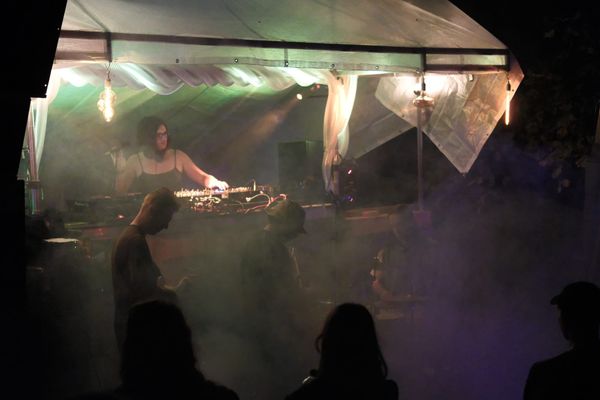
Here I am behind the decks at a warehouse party circa 2015. I played with Objekt, Solar, Aaron Clark, and Johnny Igaz aka Nackt, who died in the Ghost Ship fire about a year later. Photo by Alice.

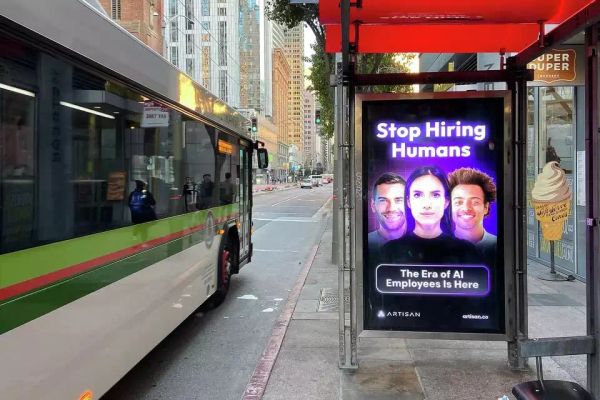
Each passing month, another friend or connection would depart for Berlin, New York, or Los Angeles. In their stead came transplants, new to the city, wearing Allbirds and backpacks emblazoned with their employers' logos, lining up on street corners to board gleaming white double-decker chariots that ferried them down 280 to corporate campuses where they built out our new world with wireframes and code. Along with them came ads in BART stations and on Muni buses featuring phrases like "onboarding," "deployment," and "enterprise-level security." 

One day, in the cafe where I did my writing, I noticed a curious plastic contraption with phone-charging cables emerging from it every which way, like anime tentacles. A startup was selling subscriptions to charge your phone—never mind that this cafe was flush with outlets visitors could use for free. In another cafe, an old-school place run by a Vietnamese family, I went to use the bathroom only to discover its traditional wooden door had been replaced by a metal one, institutional-looking but painted a jarring lime green, with a bulging hotel-style lock. Some other startup was paying local cafes around the city—who were struggling with skyrocketing costs of doing business—to commandeer their bathrooms, charging patrons a subscription fee to use them. 

Rent-seeking had given way to toilet-seeking.        

At some point or another, I could no longer ignore the signs that something in the city had changed materially. Whatever windows of opportunity I had hoped to climb through, toward whatever creative career I had dreamed of, were shuttering rapidly—or were simply mirages to begin with.


3. 
Then came lockdown. Events disappeared overnight, as did my participation in the music industry. I spent over two years in a miasmic void of numbness and total uncertainty, and at its peak, when it felt like the walls had closed all the way in, I could imagine no way out—that there would never be any "going back to normal." What I couldn't tell you was if "back to normal" was something I wanted. I had spent so long rolling the boulder uphill, oftentimes for little more than the thrill of a good night—and those memories don't pay the bills. Here was my chance: I could just walk away. 

But I didn’t. As San Francisco began to emerge from its social coma in the middle of 2022, perhaps the last major city in the U.S. to do so, I began going out once again—if less than I used to—and I began co-producing a monthly party called Vague Terrain once again, starting over essentially from scratch.

Going out was bewildering at first: a very particular flavor of deja vu that didn't exist pre-pandemic, folding in on itself amidst childlike wonder. But I struggled then, and struggle now, with a terrible sinking feeling that comes from bleeding money and toiling for hours producing an event only to walk away with little or nothing in your pocket. It isn't exactly work you can retire on. I found myself asking the same questions as before: Why do I put in the work? Why do I put up with the bullshit? Why do I still show up?

I think back, as I often do, to those friends I lost on December 2, 2016. A fire during a rave in the Oakland warehouse Ghost Ship took the lives of thirty-six people; my friends counted dozens among the dead. I was at a DIY show in Jack London Square that night, about to head to the party, until my friend Sara sent me a burst of texts in a row: “There’s a fire at Ghost Ship,” she said. “It’s bad. Don’t go.”

Immediately in its wake, I poured everything I had into telling their stories to anyone who would listen. I had never written an obituary before, but within two weeks, I wrote four. I spoke on the radio and agreed to reporters' interview requests. I penned articles for newspapers and magazines in a meager attempt to correct the narrative: that the event that night wasn't a commercially-driven "EDM concert," nor was it a drug-addled bacchanal, but a gathering of like-minded outsiders sharing their artistry with one another for its own sake.

A year after the fire, I wrote a letter to my friend Johnny, a DJ and musician whom we lost that night. “I've been thinking a lot about grief. Does it ever go away?” I wrote then. I know now that it does not—it just changes shape. Through a nonlinear process, acts of commemoration and mutual aid bridge the chasm of loss, osmosing anguish and despair into kinship and, eventually, into celebration. 

Last year, we hosted Vague Terrain on the seventh anniversary of the fire, the first time that our standing monthly date ever landed on December 2. At first, we were uncertain how to proceed: Should we cancel the party? Host a memorial? We decided to move forward—what those no longer with us would have wanted—and booked Nihar, friend and comrade, for a live performance, and Kiernan Laveaux, a thrillingly talented selector from Pittsburgh, to close out the night. The mood was ecstatic, and when the lights came on, I remembered: That in spite of all the bullshit, to gather together—to find community in one another, between each other—matters so much more than we know. 

Kiernan Laveaux in the booth at Vague Terrain, Underground SF, December 2, 2022. Photo by RITCHRD aka Tal (I think).

I am attuned, now, to a kind of gratitude. When a friend tells me they had forgotten how vital it is to see so many other friends all at once, I bask in it; when another friend tells me that our party feels like an expression of our personalities, that who we are shines through in our booking and production, I revel in it. And at the end of the night, when a friend, drenched in sweat from dancing, tells me how much they needed that, I am aglow. 

This gratitude has always been there, of course. It's the fundament of the rave. It's something primal. Maybe today, though, it is more freely given, since it seemed, for a moment, that it could all disappear.   

And so to answer my own rhetorical question, I am not yet too old for this shit, no. Someday maybe, but not today. I'll see you on the dancefloor.

Related

Recent