Daria Lourd: Finding the way back
The Oakland artist, also known as Bored Lord, on finding her confidence and returning to form.
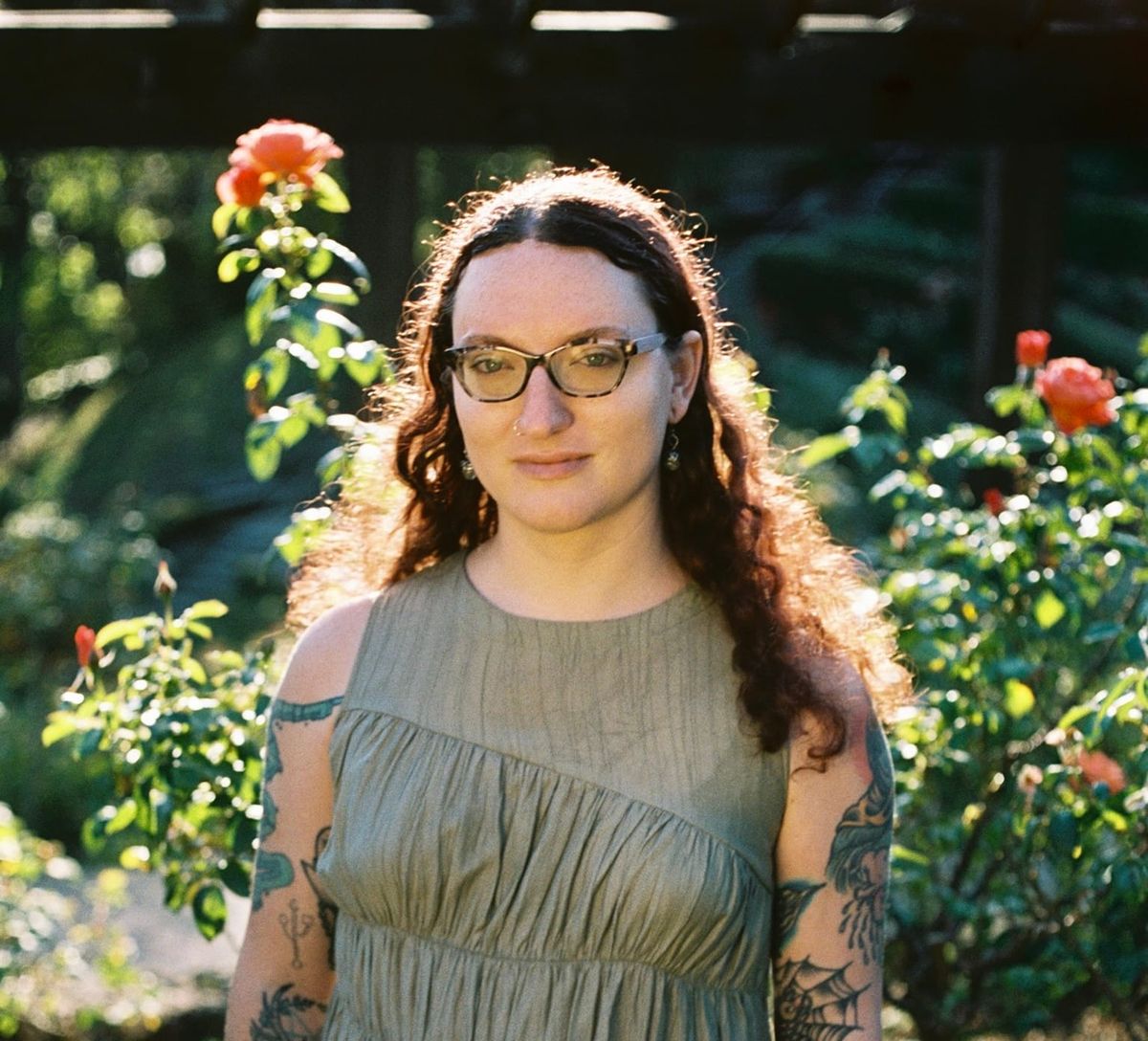

It wasn't until many years later, after she had moved from Memphis, Tenn. to Oakland, Calif., that I took better notice. In the early 2020s, amidst the haze of lockdown and the shuttering and reopening of clubs worldwide, her profile as Bored Lord skyrocketed, fueled by her poppy DJ edits, leading toward an album released by T4T LUV NRG, the record label founded by Eris Drew and Octo Octa. But her time under the spotlight was short-lived, for reasons she details below.
Then in late 2024, with no forewarning, she dropped the Bored Lord alias to release an album under her own name, For The New Moon On November 30th 2024. Lourd said the album was "not what people asked for," but it immediately became one of my favorite records released that year: "a moody journey through half-time ambient dub rhythms and beneficent synthesizer melodies," as I wrote then.
Since then, she has released two additional EPs under her own name and launched Darlynn, a collaborative project with her wife, Jaelynn Walls, on vocals. The pair have just released an album on stalwart San Francisco label Dark Entries—and it's even better than their debut single, which was on repeat for weeks on end.
I recently spoke with Lourd to learn about her journey from the South to the Bay, how she rediscovered her voice as an artist, and how she's building a new path forward.
This interview has been edited and condensed from a larger conversation. Read, listen, and enjoy!
[I come from] a pretty chaotic, broken home situation. But I'm kind of a spitting image of my mom: Both tattooed weird ladies, and she was into music. She grew up doing more "official" music stuff—piano, cello, clarinet, and bassoon. When I was young, I was on her lap [when she was] playing piano.
[Later,] being a weird, quiet trans kid, I really buried my head in music, and it was like—the rest of your family doesn't know how to connect with you whatsoever, but they know this one thing about you: We know you like music, so …
It worked in my favor. Because [music was the] only thing they knew how to connect to me with, I went through everyone's record collections, and tape collections, and CD collections really young.
To this day, a lot of [those records] stuck with me: Prince, Janet Jackson, Nirvana, Pixies. Those were the really big ones. There was a lot of other stuff around that, but [those artists were] the tried and true.
[I played in bands growing up.] As a kid, I got an 8-track, so I was recording my own stuff at a pretty young age, probably 14 or so. I got a guitar—I didn't have an amp, but I had a guitar, and I figured out 8-tracking and I would just record, with a little keyboard, drums, and whatever.
And through that, I found friends—actually, from youth group, from being in a church. I started bands that way, doing church basement DIY stuff. Pixies was a really big thing for me—so, [back then,] I'm 17, I'm living in Memphis [Tennessee], I'm living with my mom, and my mom is like a socialite in the indie rock scene. She dated different guys, and all the bouncers knew her, and she worked at different bars.
And so I was in the scene, and playing open mics already, and I met some kids that way, and we played all the co-ops, we played all the bars. We weren't old enough to drink at all, but we were pretty prolific at a pretty young age. We were gigging pretty heavily, especially house shows, and the dive bar scene. I got a really early introduction into that, and I honestly grew up inside of that world.
That's how I met this guy Ben Baurmeister, who was a drummer in pretty much all the bands. He drummed so much, in so many bands, that sometimes he couldn't make a gig, and he would just program the songs on a drum machine and give them to the band. It's through him that I found out what a drum machine was.
As soon as I saw a drum machine, I kind of abandoned [everything else]. I mean, I was still in a band for maybe a year, but it was like everything clicked. The drum machine made sense.
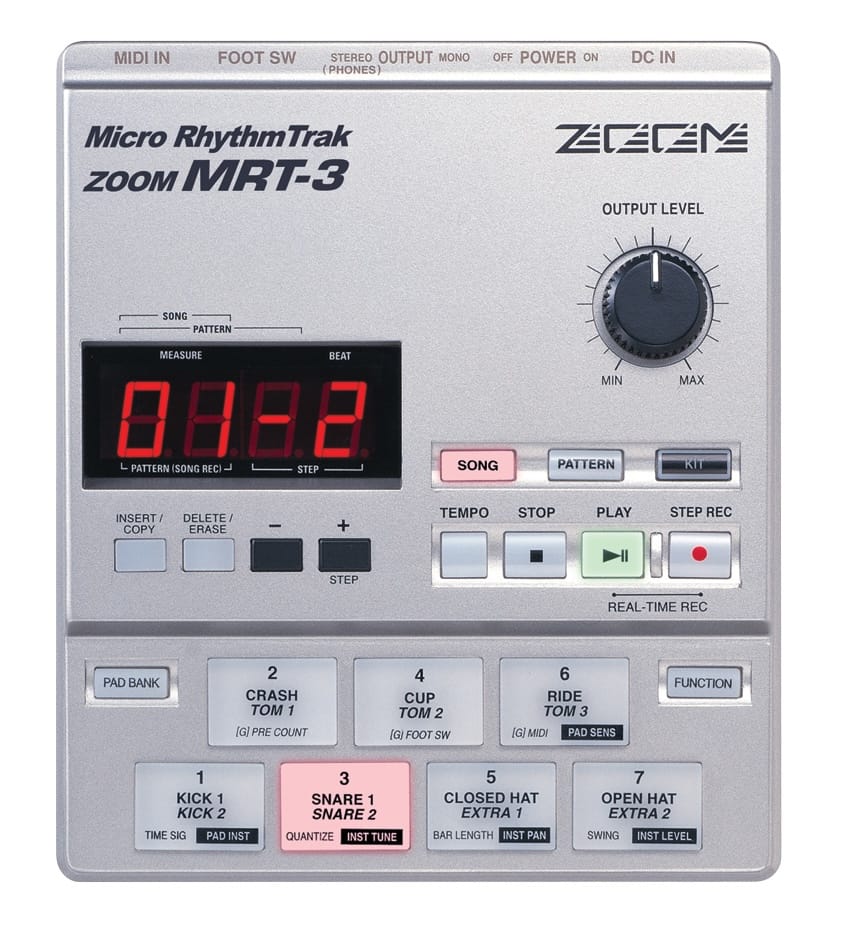
It was a Zoom [drum machine]. Extremely low tech, a Zoom MRT-3. Like, I'm using my part time job money, and gig money, and begging my mom for 30 bucks to buy this piece of shit. And I program the whole thing, all 99 patterns, in a day.
I'd say the reason [why I learned the drum machine so quickly,] the reason why I am this way, is because my first instrument was really the 8-track. Everything is guided through that. It's why I like playing with a mixer.
[Back then,] I had a friend with a loop pedal, and we realized that the highest setting for a delay on this loop pedal was a second. A second is 120 BPM. We didn't understand what MIDI sync was, but we understood that [our loops] were timed, and that 120 [BPM] was one second. So we would just make a loop, and then I would press play—1, 2, 3, play—on the drum machine.
I was resistant to Ableton, too. When I finally found it—I didn't even know what a rave was, but I was about 19 years old, and it all takes off from there. My friend and I started making beats for our other friends, who were rappers. We were playing house shows where we were doing, in retrospect, extremely experimental stuff. Freeform, improvising a bunch, working off of a few ideas. Again, no MIDI sync. From that, another friend, who had been doing more actual "IDM" stuff, saw us play, and was like, What are you doing? [laughing] And he invited us to a beat meetup.
This was in Memphis, and there were probably 10 of us, and we met up once a week. It was like a workshop—we'd show each other stuff, teach each other, and we turned that into a collective, called Spoiler Alert.
L.A., Chicago, and London—[those were the scenes we were] looking at, and we were like, [These scenes are] having these moments. Meanwhile, we were soaking it in here in Memphis with absolutely nothing. Doing these weird experimental shows, making mixes and CDs, throwing parties.
Some of [our crew members] were making more broken-beat boom-bap era [hip-hop] that was happening [then]. Some of them were doing more like IDM. I was experimenting with footwork, and maybe what would [now be called] post-dubstep, at the time. And we were still bringing in all of our other Memphis influences.
This turned into an online label around 2012. [Back then, it was] early SoundCloud, early Bandcamp, and Facebook groups and Tumblr were still usable. That label was called Rare Nnudes, [which was] spearheaded by me, our friend Charles, who produced as p l a i n t e x t, our friend Michael, who produced as minivan markus, and then Julian [Edwards], who is bastiengoat.
The first release I did as Bored Lord, Estridge, [was on Rare Nnudes] in 2013.
[For awhile, Rare Nnudes] tried to do weekly releases. At the end, we didn't stick to that, but we did roughly 100 releases, mostly quick DIY [releases]. It was directly inspired by the fact that I had lost a job and was asked to roadie for a punk band at the same time. I went on the road with this punk band, and drove them around, and they were not very good. I mean, at the time, I thought they weren't very good, but they were cool people.
And I drove them around for, God, like five weeks, or something. And they were so DIY—they burned all their own CDs and made all their own covers, and slept on floors and worked at fast food restaurants and just somehow pulled all this shit off. And I was like, Dude, if they can do that, we can do that with electronic music.