Civilistjävel!: Sculptures in sound
Swedish artist Tomas Bodén discusses his signature polar ambient sound, honed over decades: icy, vast, dub-inflected, and collaboratively-minded.


I discovered Civilistjävel! on a chance visit to the short-lived Low Company record shop in London, where I met proprietor Kiran Sande, the former operator of New Industrial record label Blackest Ever Black. After a lovely chat with Sande, I asked him to pick out a handful of records I might like. He handed me five records—one of them was the second untitled Civilistjävel! release, which he had just repressed. "You'll love this," he told me.
He was right, and I've followed Bodén's music ever since. Upon the announcement of Älvgång, his eleventh album in eight years, I decided to reach out to Bodén for an interview.
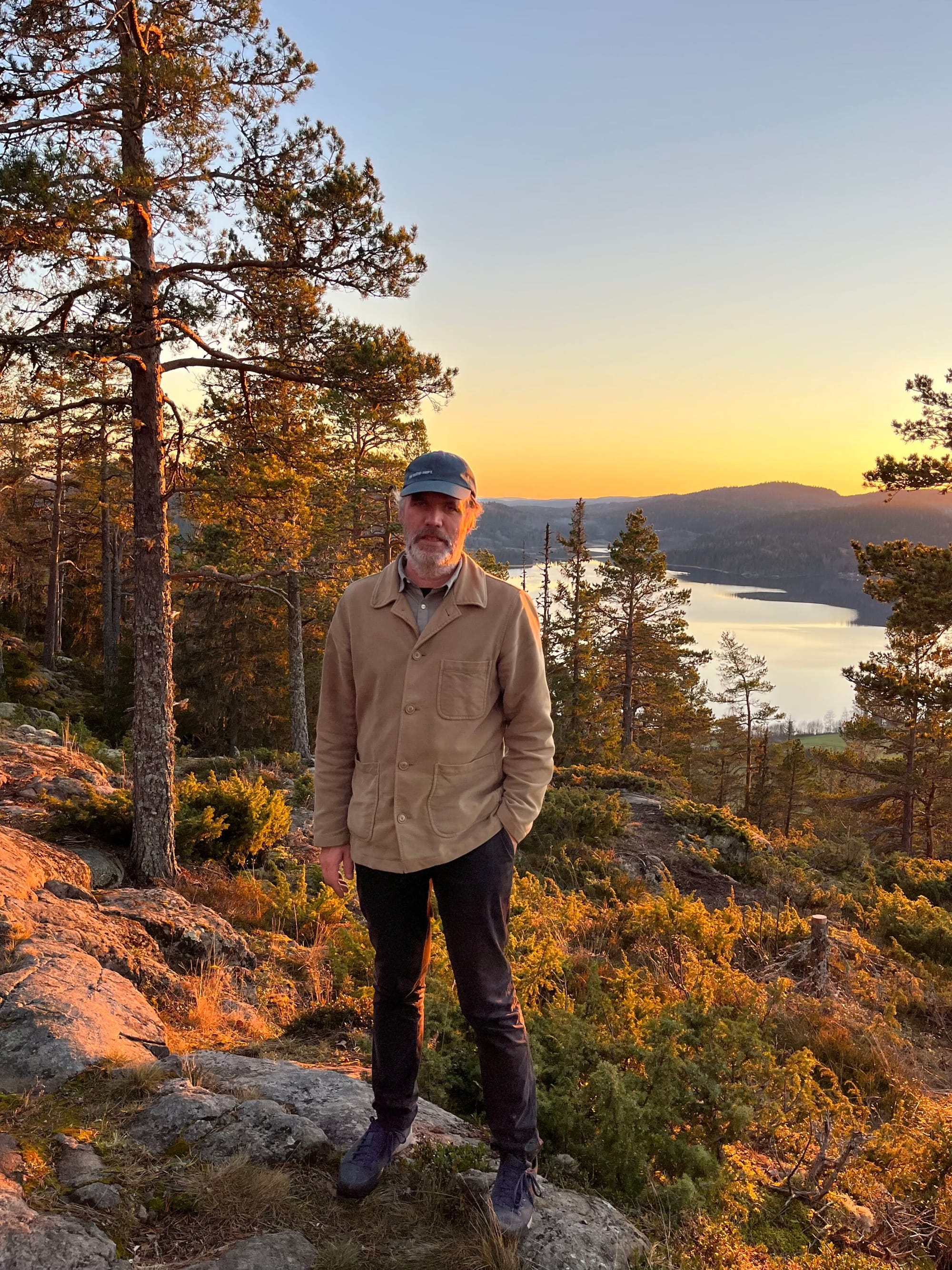
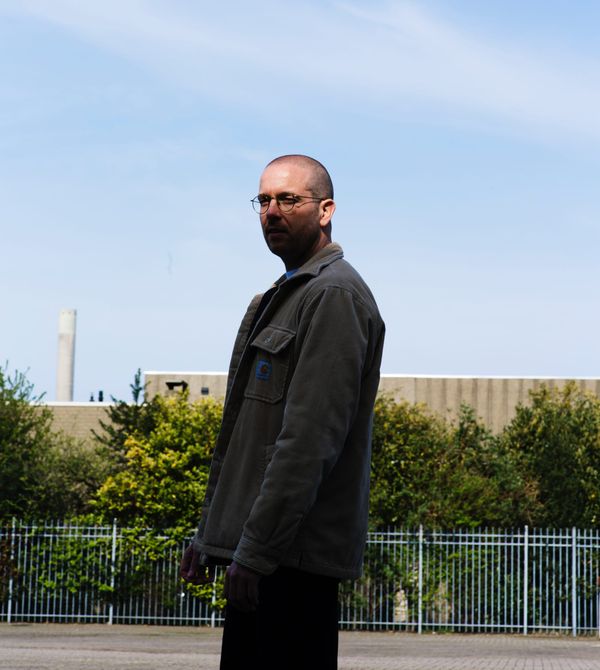
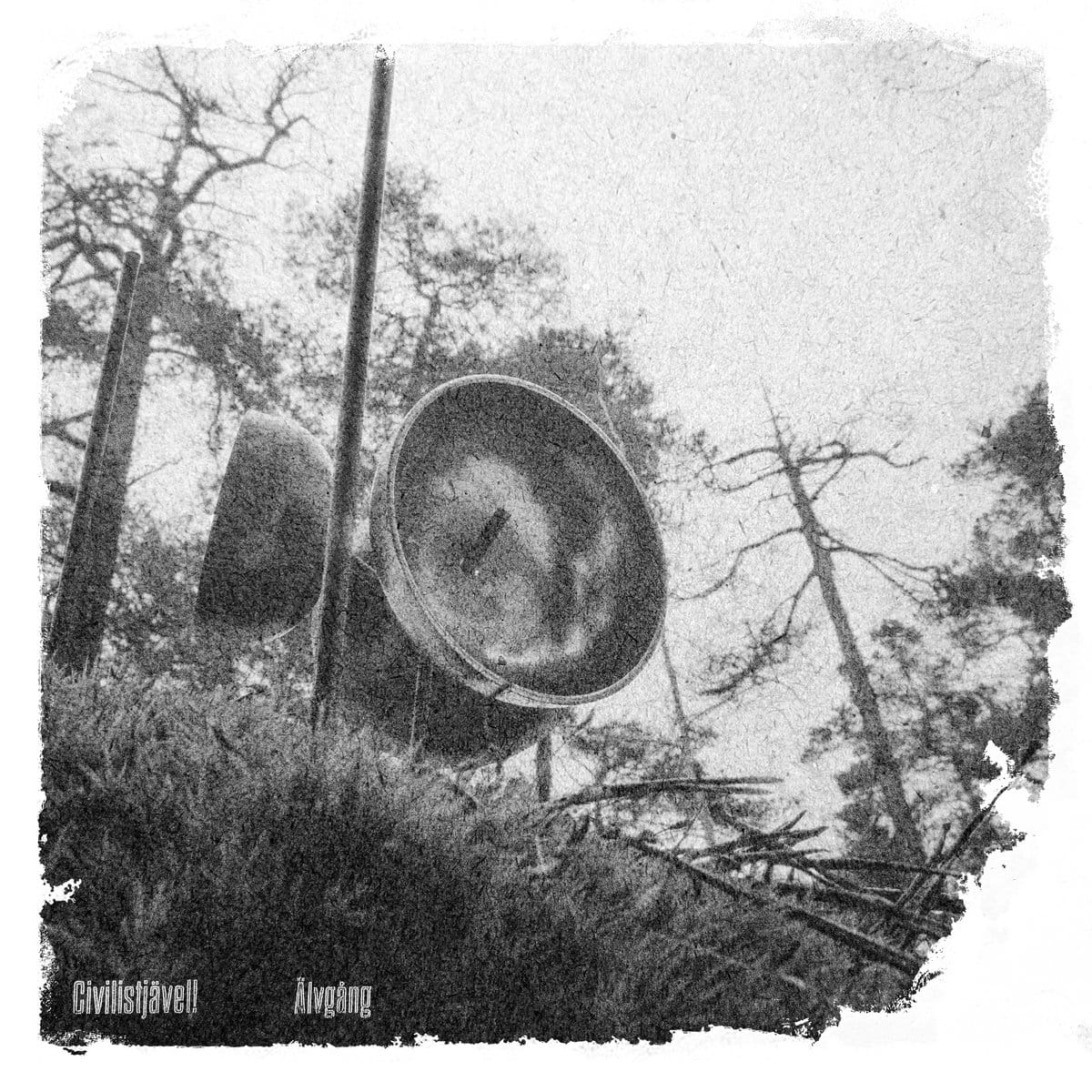
As it turns out, Bodén has been honing his particular sound since the early '90s—hence the profusion of his records, which feature archival and contemporary material alike. And that even though his music may sound chilly and crisp—like the arctic landscape he stands in above—it is organic and human in process and design, fueled by improvisation and collaboration.
I'm proud to present this conversation with a singular artist. Read, listen, and enjoy!
Actually, that's how many people, I think, discovered [my music], visiting Low Company. It's not the first time I've heard that one.
The team was very good at selling the albums. [Kiran Sande, founder of Low Company] was very good. I remember the second [Civilistjävel! LP]. He told me that people were queuing up and all the copies they had in the store were sold like one minute after they opened, everything was cleaned out.
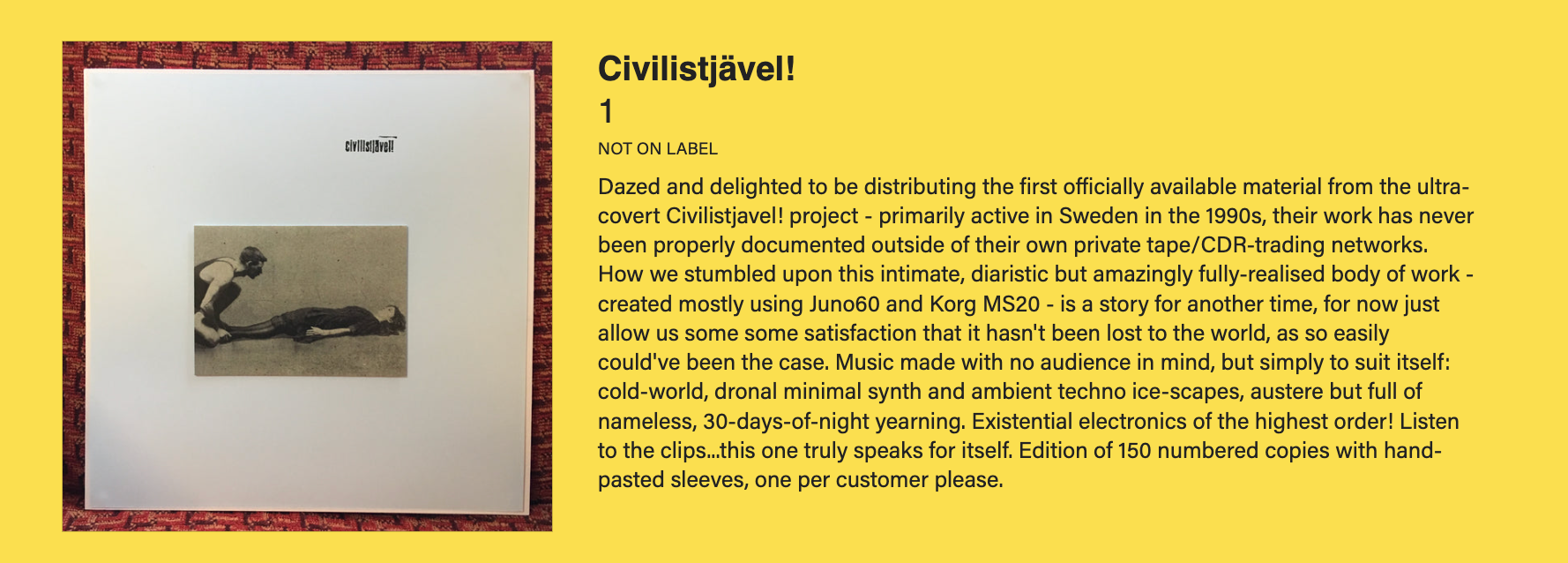
[I initially connected with Kiran Sande because] I did mastering for Low Company releases. And then I sent him this big folder of [my own] archival [music]. He curated the first [Civilistjävel! record from that archive].
[The first record] came out in 2018. [I have been making music like this for a long time,] but not under this name. I didn't have a name for it. It was just the music, then I had to come up with a name when he wanted to release it.
For some reason, I thought it was very funny to give it a name that sounds like a Swedish punk band from the late '70s. But more than that, in Swedish, it's quite an invective—or it feels very aggressive. Like a word that, to me, indicates that it should be a punk band. It's a very good name, for a punk band.
[I've been making music for a long time.] Maybe even earlier than 2001—[I've been involved in bands and projects] from the mid '90s, I would say.
When I was seven, until I was 14, I played drums. When I was 14, I bought a drum machine, and that was the start [of making electronic music]. I bought a [Roland TR-808], which was the only one I could afford, which is funny today.
I got it for like $60. [Back then,] I preferred the new cool digital drum machines, but I couldn't afford them. The only thing I could afford was a real 808. That was my budget.
That's kind of how it was back then. [I bought the 808] and a [Korg] MS-20, [both of] which I still use today, by the way. My most used instruments. On the new album, [I use] my old MS-20 and my [Roland] Juno 60. Those are still the classics, the standby.
[Did I play any "analog" instruments?] No, not really. From when I went to high school, and after that, in college, I was doing electronics in different bands.
I'm from the north of Sweden, so [I grew up with] very small, very marginal [music] scenes. [The projects I was involved with] didn't do a lot of releases, but we played small shows around town. One was a kind of folk-electronic band, and then I [played in] a synth pop band, too.
But I always made music by myself. I had a little home studio with my few synthesizers, and I recorded tapes. And that's actually the first Low Company [Civilistjävel! record]—tapes from the early '90s. Exactly what no one believed. [laughing]
Kiran [Sande], in the [press release for the first record,] wrote This is undiscovered. But that was actually true. Then I started mixing newer material, and I did five albums of archival material for Low Company, and some of it is from the 2010s—a few tracks were new, but only a few, I think. Most were from the '90s.
[I've been writing Civilistjävel!-style music for many years,] but not with the intent of releasing it. But lots of practice [went into writing these tracks], of course, like hundreds and hundreds of hours.
Actually, it takes more time to do one of those archival releases because there's so much editing. I have to do weird mixing—I can't mix it properly because [the archival recordings] were never multi-tracked.
[What music was I listening to in the '90s when I wrote these archival tracks?] The early scene around Warp Records would be one. I remember I bought some of the early Warp releases when they came out—but especially the first Autechre album was a big, big thing for me.
And I was listening to dub, of course. That was even before Warp. I have a big interest in soundsystem culture in general. I always liked it, and rave as well. I was very much into the rave scene in the early '90s. [Back then, there was a rave scene happening] in Stockholm, but not where I grew up. I was more romanticizing—listening to the music and thinking [about it].
And that gave me kind of an interesting perspective on it. Still, [to this day,] I can't make club music. I've always tried. I mean, you can hear it—many of my tracks actually start out as me trying to do some kind of club music, but I always fail.
I've been telling Fergus Jones, who runs the FELT label, that I will do club 12"s for him. I will do it, I say. Then I try and try—but for some reason, it always turns out just sounding like myself, and it's not club music at all.